17 Mar 2026
- Competition
- Competition Policy Studies
Impact of State aid rules for banks in difficulty
The financial crisis put large parts of the European banking sector at risk and prompted extensive public intervention. Member States provided aid to 566 banks across 22 countries through a range of instruments, from liquidity guarantees to capital support, under State aid rules supervised by the European Commission. While these measures aimed to stabilise the financial system and restructure distressed banks, an important policy question remains: did State aid achieve its objectives without creating harmful side effects?
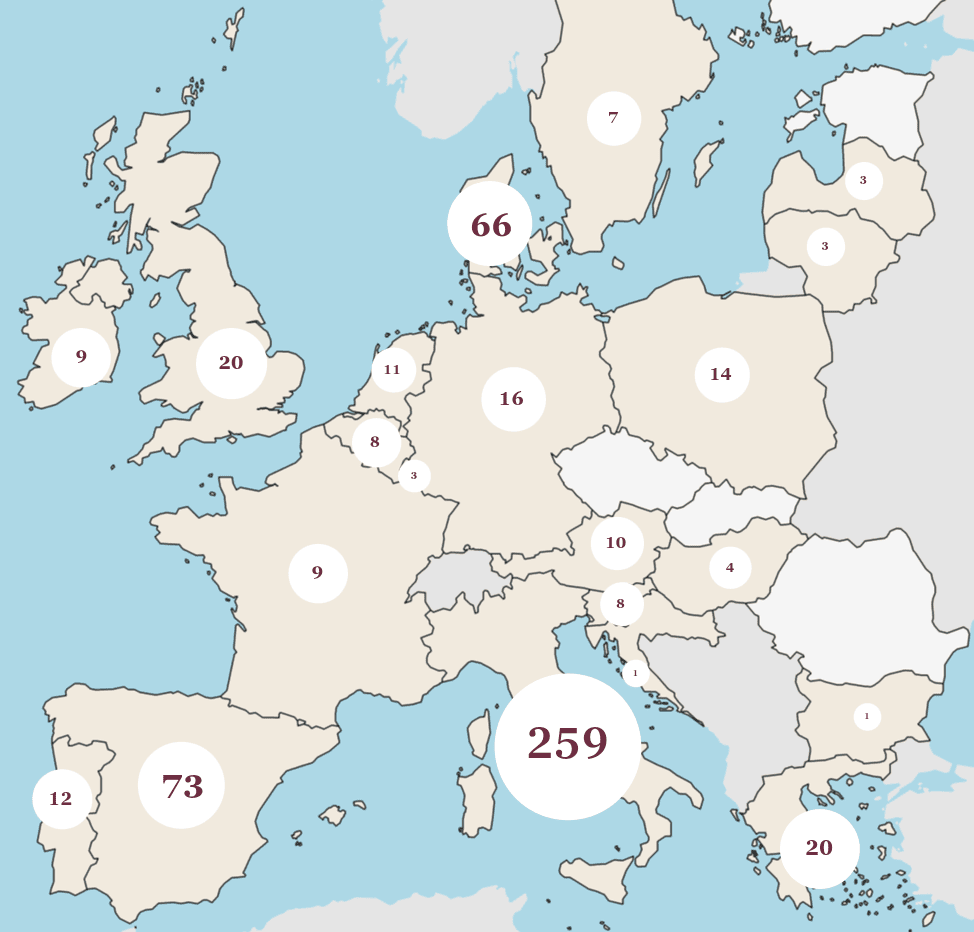
Figure 1: The number of subsidised banks per country
This study evaluates the impact of State aid to banks in difficulty across five key dimensions:
– Financial stability
– Banks’ viability
– Competition
– Market discipline and moral hazard
– Efficiency of the State aid control framework.
Below we provide a brief overview of the study.
State aid contributed to stabilising the banking system
One of the primary goals of State aid during the financial crisis was to safeguard financial stability and prevent systemic collapse. The analysis links State aid interventions to improvements in financial stability indicators across the European banking sector. In particular, capital support measures are associated with faster stabilisation effects compared with liquidity-based measures. Over time, financial stability indicators improved substantially even as the volume of aid declined, suggesting that the interventions helped to stabilise the banking system during the most critical phases of the crisis.
Competition effects depend on the type of aid
State aid can potentially distort competition by favouring certain banks. The study therefore compares aided banks with similar non-aided institutions to assess changes in pricing behaviour and profitability. The findings suggest that banks supported through State aid schemes experience temporary increases in markups, indicating short-term competitive distortions. By contrast, banks supported through individual aid decisions — typically accompanied by comprehensive commitments — do not show such distortions.
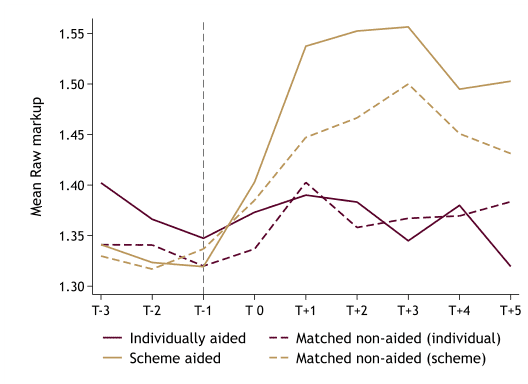
Figure 2: The development of raw markups for aided and non-aided banks
State aid rules require aided banks to restructure and return to sustainable operations. The evidence shows that the performance of aided banks tends to converge towards industry averages over time. On average, this convergence occurs within five years of the receipt of aid, consistent with restructuring objectives set by the European Commission. Where banks cannot credibly restore viability, exit from the market remains an important outcome.
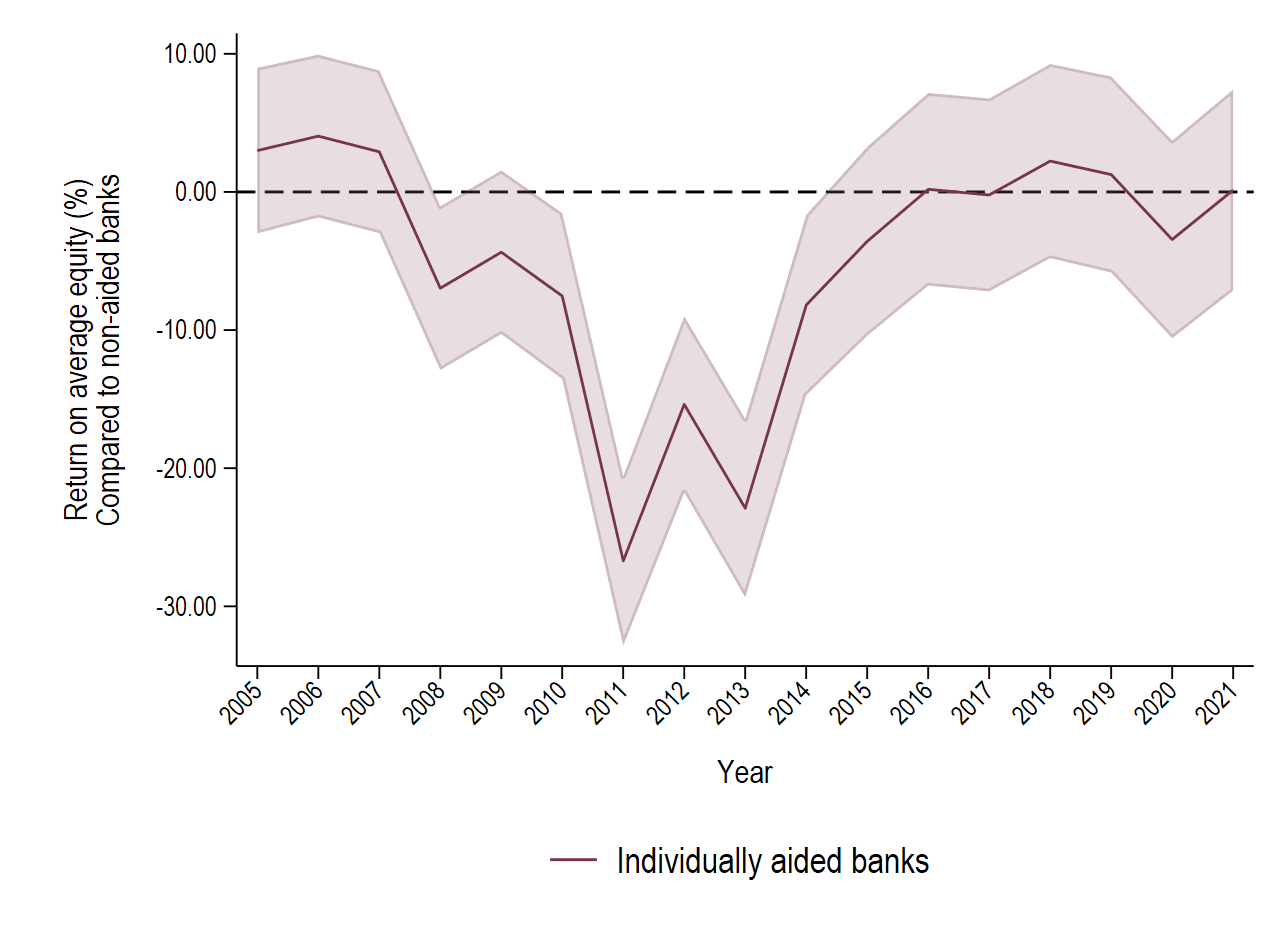
Figure 3: The development of ROAE in individually aided banks
Market discipline remains in place
Public support can weaken incentives for prudent risk-taking if investors expect future bailouts. The analysis finds no evidence that State aid has undermined market discipline. Funding providers continue to differentiate between banks according to their risk profiles, while burden-sharing measures ensure that investors bear part of the restructuring costs.
Balancing effectiveness and administrative effort
The study also assesses whether State aid achieved its objectives efficiently. Individual aid procedures involve detailed oversight and commitments, while aid schemes allow support for a large number of banks with lower administrative effort. The evidence suggests that the combination of both instruments can balance limiting competition distortions with maintaining reasonable administrative costs.
Key takeaways
- State aid contributed to stabilising the European banking sector during the financial crisis.
- Aided banks typically return to viability or exit the market within five years of receiving support.
- Commitments attached to individual aid decisions help mitigate competition distortions.
- Market discipline and burden-sharing mechanisms remain important safeguards in bank rescue policies.
- A mix of individual procedures and aid schemes can balance effectiveness and administrative efficiency.
Authors: Dr Elżbieta Głowicka; Dr Thomas Hildebrand; Jan Málek, PhD; Weijie Yan, PhD; Lukas Gieser; Vedika Hegde; Zachary Herriges; Giulio Pietrobelli; Giulia Santosuosso; Simon Specht; Francesca Urzi.
Academic authors: Prof. Thomas David, PhD (ESCP Business School); Prof. Dr Michael Tröge (ESCP Business School); Prof. Dr Tomaso Duso (German Institute for Economic Research); Prof. Jo Seldeslachts, PhD (German Institute for Economic Research); Prof. José María Martín Flores, PhD (CUNEF Universidad); Mahn Hiep Nguyen, PhD (Foreign Trade University); Katarzyna Kwiatkowska, PhD. (University of Szczecin); Joanna Rachuba, PhD (University of Szczecin); Dr Dorota Skała (University of Szczecin); Prof. Dr Daniel Streitz (Halle Institute of Economic Research and Friedrich-Schiller-Universität Jena).
Under the guidance and strategic input from Prof. Lars-Hendrik Röller, PhD and Dr Hans W. Friederiszick; and in collaboration with Marie Christiaens; Pierre-Louis Clavé; Akash Jain; Sofia Elena Karl.
The European Commission is currently inviting stakeholders to provide feedback on the future revision of the State aid rules for banks in difficulty. The deadline for submission of the feedback is 14 April 2026.
To learn more about the analysis and its policy implications, access the full study below.
Contact
For more insights or any questions, please contact E.CA’s experts.